
What’s New

Saving Leftover Wine

March 31, 2010

They say a glass of wine a day is good for your health so in the absence of drinking with company it’s inevitable that we will have leftover wine. That brings up the question of the best ways to store an open bottle of wine. It is rather important in an attempt at maintaining the …

They say a glass of wine a day is good for your health so in the absence of drinking with company it’s inevitable that we will have leftover wine. That brings up the question of the best ways to store an open bottle of wine. It is rather important in an attempt at maintaining the quality and final taste of the wine because once you remove the cork, oxygen can greatly affect the quality of the wine. Storing conditions do matter and there are a number of things you can do to help in the process.


Refrigeration is key as the cooler temperatures slow down the degradation of the wine so tightly re-corking the bottle and storing it in the fridge is the simplest and most important step. Half bottles of wine are available for purchase and if you happen to have a spare empty half bottle (375 ml), pour the leftover wine into the bottle and re-cork. This way the amount of oxygen that is allowed to come into contact with wine is substantially diminished. 


A rather more debatable method of storage is the use of a hand pump vacuum accessory. There are some that believe the vacuum method to be ineffective and even detrimental causing the wine to become flat and dull. The same argument surrounds the use of a compressed nitrogen device that squirts nitrogen into the bottle and is supposed to displace oxygen. Both have their naysayers and enthusiasts alike and both are good accessories in theory and certainly worth personally trying but there are varying reports on either of their effectiveness.


Another popular storage option for open wine is, believe it or not, in the freezer where individual servings can be frozen in ice cube trays and used at a later date for cooking. And if freezing isn’t  for you, why not go ahead and plan a meal cooking with your leftover wine right away? There are many delicious dishes that are made with wine.


One last thing to note is the ideal maximum storing timeline. Some are adamant that  leftover wine be consumed the next day and no longer while others follow a 3-4 day rule. This is where your palette makes the decision but note that older wines will deteriorate in quality much quicker than younger wines. Also, make sure to remove red wine from the fridge a couple of hours before consumption to allow it to come to a suitable temperature. These are just a few tips to ensure your wine experience continues to be even that much more enjoyable. One glass at a time.


(Photo Credit: pizzeriaventi.com)

 

The Wonderful World of Roses

A lot of people think of Mateus when they think rosés. Mateus is the wildly popular sweet, lightly fizzy rosé which was created and targeted specifically to the North American palette, and for many, that will always be the preferred choice. After all it was the favorite for rosé drinkers from the 1950’s well into the …

A lot of people think of Mateus when they think rosés. Mateus is the wildly popular sweet, lightly fizzy rosé which was created and targeted specifically to the North American palette, and for many, that will always be the preferred choice. After all it was the favorite for rosé drinkers from the 1950’s well into the 80’s. However if a sweet wine isn’t for you, there are other choices. Things have come back around to the demand of a dry rosé which seems to be changing even the minds of those who scoffed at the thought of drinking it at all. In fact, a couple of years ago, the volume of sales even outnumbered that of white wines in France and the demand for dry Rosés in North America have sky rocketed.


There has been much talk of the rosé the last few years and for good reason. Rosés are often under rated and don’t get the credit they deserve. There are many reasons to choose rosés. For example, a great bottle of rosé can be found for a very reasonable price. They are a younger wine best enjoyed now without years of aging. But perhaps most exciting for any food lover is that rosés pair very well with a wide variety of foods from prawns to goat cheese to chicken, spicy chorizo and fish and BBQ is a perfect match for a dry rosé. 


Spring and Summer are absolutely the time of year to sit back with all of the wonderful things a rosé has to offer. Refreshing, versatile and very drinkable have all the makings of a warm weather hit. And the new generation of rosés are just that.


(Photo Credit: Creative Loafing.com)


Spotting Corked Wine

March 30, 2010

There has likely been a time or two when you’ve opened a bottle of wine and it has smelled and tasted a little off, perhaps a lot off. In these cases it is not your taste buds rebelling against the wine in question, it is probably because the wine is “corked”. Now, corked is not …

There has likely been a time or two when you’ve opened a bottle of wine and it has smelled and tasted a little off, perhaps a lot off. In these cases it is not your taste buds rebelling against the wine in question, it is probably because the wine is “corked”. Now, corked is not a term that is used to describe those bits of cork that sometimes make their way into our glasses. Corked is a wine term used to describe a bottle that has been contaminated and is essentially undrinkable.


There are various reasons for this and it’s often debatable. Some people are staunch believers that corking happens strictly from a bad cork while others believe in the thought that the tainting may occur from wooden barrels, storage conditions of the wine and even transportation of the corks and wine. It’s important to note that a corked wine has nothing to do with the original quality of the wine. Cork taint can affect wines irrespective of price and quality level. There is one undisputed reason for cork taint and that is the the contamination of a chemical called 2,4,6-Trichloroanisole or TCA for short.


Cellar Notes has a good explanation detailing TCA comntamination:


A ‘Corked’ wine is a wine that has been bottled with a cork that is contaminated with TCA (2,4,6-Trichloroanisole). TCA contamination usually comes from corks but can also come from barrels, other cooperage or even, apparently, from wood within the cellar including walls or beams. The term ‘corked wine’ is applied to all wines with TCA contamination because corks are the souce of most of the problems. The wine industry estimates that as many as 3% to 7% of all wines have TCA contamination at levels that can be detected by consumers. Because most people are not trained to recognize the smell and taste of TCA, only a very small fraction of these bad bottles are ever returned to stores or sent back at a restaurant.


Even a very tiny amount of TCA in a wine can ruin it. Most people become aware of TCA in quatities as small as 5 parts per trillion and some individuals are even more sensitive. When TCA is present in quantities high enough to be evident to a person, it comes across as ‘musty’ aromas and flavors. Even when TCA is not evident in the smell or taste of a wine, very small quantities can subdue the aromas and flavors of fruit that the wine would ordinarily exhibit.


TCA does not pose a health risk (at least in the levels found in wines). It just imparts the aromas and flavors that are objectionable when found in sufficient quantity. Many wines have levels of TCA that are below the threshold of perception. Wine is not the only place you can find TCA. It is also found in some municipal water supplies as well as in some teas.


A great deal of work continues in the cork industry as well as at wineries to develop methods to eliminate corked wine. So far, no completely reliable method has been found.


There are other causes of bad bottles of wine, but TCA contamination is the primary fault you will find in otherwise well-stored bottles. Other faults can include wines that are oxidized, lightstruck or have undergone unplanned secondary fermentation.


Detecting corked wine can sometimes be fairly easy with just a sniff of the wine. It will have a characteristic odor described as resembling a moldy newspaper, mushrooms, wet dog, damp cloth, or damp basement. However there are times when it’s a little more challenging to detect and the only way to do so is by tasting the wine. If this is the case, it will taste like all of the similar qualities above as well as tasting astringent and with a raspy finish. 


Sadly there is no easy way to avoid a corked bottle of wine. Cork is a natural product and can be fair game for microorganisms. And if nature has taught us anything it’s that not everything can be perfect all of the time. 


(References: New York Magazine, Cellar Notes, The Wine Doctor. Photo Credit: RSC.org)


Fashionable Wines for Spring

March 28, 2010

Spring has sprung and that means it’s time to lighten up. The days are longer, the flowers are blooming and the weather finally permits patio lounging time and there is no better way to enjoy that time than with a nice cool glass of wine.   It’s true that wine should never be considered based …

Spring has sprung and that means it’s time to lighten up. The days are longer, the flowers are blooming and the weather finally permits patio lounging time and there is no better way to enjoy that time than with a nice cool glass of wine.


It’s true that wine should never be considered based on whether it’s fashionable or not. After all, for many the word fashionable translates to trendy and that is certainly no way to choose your wines but there is good reason to relate wine to seasons. Spring for example embodies rejuvenation and invigoration and these characteristics call for young, light wines.


So what then are excellent choices for this beautiful season? Crisp Rieslings, an elegant floral Pinot Gris, a refreshing, zesty Sauvignon Blanc or a fruity German Muller-Thurgau are all supremely satisfying for Spring and otherwise. The ease in which these wines can be enjoyed are perfect choices for the refreshment that is Spring.


(Photo Credit: Seaside Florida)


Food and Wine’s 125 Reasons We Love Wine

March 14, 2010

The contributors over at Food and Wine.com compiled a list of their favorite things in the world of wine. The list ranges from some of their favorite wine regions, International wine country hotels, Urban Vineyards, quaint country Inn cellars and Italian villas.  The list also delves into the eccentricities of the wine world, say for example if …

The contributors over at Food and Wine.com compiled a list of their favorite things in the world of wine. The list ranges from some of their favorite wine regions, International wine country hotels, Urban Vineyards, quaint country Inn cellars and Italian villas.  The list also delves into the eccentricities of the wine world, say for example if you are in the market for a $5000 antique corkscrew, it’s on the list. Looking to serve the world’s most exotic raisins at your next soiree? They’re on the list too.


While there are certainly a few elaborate entries, for the most part the list is a huge source of information for any wine lover.


Click here for the full article on Food and Wine.com.


(Photo Credit: Linda Paul)


Decanting: When, Why and How-To

February 19, 2010

Decanting wine is essentially the process of transferring wine, usually older wines or port, into a different vessel than its original bottle. It is a simple process with considerable benefits. Decanting is used to remove the sediment that may have accumulated in older wines but it is also a useful tool that allows wine to …

Decanting wine is essentially the process of transferring wine, usually older wines or port, into a different vessel than its original bottle. It is a simple process with considerable benefits. Decanting is used to remove the sediment that may have accumulated in older wines but it is also a useful tool that allows wine to successfully breathe.  


The most common reason for decanting is to remove the sediment from an older wine, particularly red wine. The reason sediment occurs is because wine naturally has particles from the grape skins and seeds but with the aging process those particles have had the opportunity to separate from the wine and settle in the bottle. By using a decanter you can easily separate the sediment from the wine. This is a very desirable quality of decanting as the sediment is not something one would want to consume. While it is a natural result of the aging process and completely harmless, sediment is not exactly appealing to the eye or the mouth.


Another benefit of decanting is to let the wine breathe which simply means letting oxygen mingle with the wine, usually younger wines, to open up the the aroma and revealing the full potential of the wine by softening its young bite. Simply uncorking a bottle will not permit enough air exposure because of the small opening of the neck.


Finally, from a strictly vain perspective, using a decanter is a beautiful way of presenting your wine. In most cases, decanters are designed to look charming and attractive. The old saying holds true that we eat with our eyes first and the same can be said for enjoying wine. Color is an important factor in wine drinking and for that reason alone, serving wine in a decanter is fabulously alluring. 


When decanting to remove sediment there are a few steps to follow:


  • Stand the bottle upright for several hours or the day before you plan on decanting so the sediment can settle on the bottom of the bottle.
  • In addition to removing the cork you will also want to remove the foil seal surrounding the top of the bottle. This allows you to see the entire bottle and thus, when the sediment reaches the top you will know when to stop pouring. Some people choose to do the pouring process with a lit candle behind the bottle to further assist in noticing the sediment in the neck of the bottle. To do this, place the lit candle directly behind (but not touching) the neck of the bottle.
  • Gently and slowly pour the wine into the decanter trying to avoid any of the sediment sneaking in. You will notice the presence of the sediment when you see it as it is much thicker and darker than the actual wine itself. Once you see the sediment in the neck of the bottle while you are pouring this is the time to stop pouring. Place the bottle down to rest for a minute or two then carefully pour once again just to be sure.
  • After you have successfully decanted the wine you may serve it immediately.


In the absence of sediment if your goal is to let a younger wine breathe, simply pour the wine into the decanter and let it breathe an hour or so.


When choosing a decanter you’ll want to look for a clear glass carafe. There are many different decanters on the market and they can range from simple glass to exquisite crystal. They come in an array of shapes, sizes, even upright or sideways versions. And while the more elegant decanters can run fairly pricey, a basic decanter will retail for an average of $20-$30 and that is all one really needs for effective decanting. These can usually be found at any gourmet kitchen shop, specialty wine stores or are widely available online.


Decanting is not absolutely necessary by any means but it does have its benefits and if for just a few reasons it certainly adds an extra element to partaking in a delightful bottle of wine.


(Photo Credit: Riedel.com)


Basic Proper Wine Storage

February 10, 2010

You’ve chosen your wine tastes, you know what you like but before you begin your wine collection it is important to consider proper storage for your wine. The reason storage is relevant is because there are many variables that can affect the final outcome of your wine, especially if you plan on storing it for …

You’ve chosen your wine tastes, you know what you like but before you begin your wine collection it is important to consider proper storage for your wine. The reason storage is relevant is because there are many variables that can affect the final outcome of your wine, especially if you plan on storing it for longer than six months. Whether you are planning short term or long term storage, at a minimum, there are five basic factors:


Temperature

Humidity

Ventilation

Light

Storage Angle


1. The temperature in which you store your wine is perhaps the most important factor. Especially when aging wine but even wine that is stored for just a few months can be affected by poor temperature conditions. Ideally you’ll want the temperature to be between 40-65 degrees Fahrenheit or 7-18 degrees Celsius. It is also important that the temperature level rarely fluctuates more than 5 degrees F or 2-3 degrees C.


2. Humidity is important because a too humid environment can create mildew and potentially rot the cork. Where as if the environment is too dry, the cork can dry out and crack. An optimal humidity level is one that is between 50% and 70%.


3. The cork may allow air to seep into the bottle so ventilation is important because storing your wine near products that have intense odors such as cleaning products could inevitably permeate into the wine.


4. Although the bottles have built in filters that will protect the wine to a certain degree, they can only do so much but not all, therefore storing wine in a dark place that will not allow UV light to penetrate the glass, which causes degradation, is necessary.


5. Store your wine anywhere between horizontally and a 45 degree angle to ensure the wine is always touching the cork which will further reduce any chances of air getting into the bottle through the cork.


Essentially what we are trying to achieve with proper storage is avoiding the allowance of air, humidity and light to come into contact with the wine being that these three factors are what will ultimately alter the quality of your wine. Humidity and temperature fluctuation can be the hardest areas to control and that’s where a wine cooler, otherwise known as a wine refrigerator can be helpful. There are many brands, sizes and styles available ranging from the most basic and economical to the elaborate and extravagant. While a cooler is not critical to your wine storage it can certainly be of assistance and make the process easier.


For more information on wine coolers click here for a comprehensive guide from Wine Coolers Guide, complete with reviews on a variety of coolers.


(References: Cellar Notes, Basic Wine Knowledge, Jonathon Wilson. Photo Credit: Wine Storage.biz)


Successfully Serving Wine at Your Superbowl Party

January 31, 2010

Dare you serve wine at a Superbowl party? Oh yes, you dare. If you’re confused, allow me to explain. Superbowl parties are no longer an event where only chicken wings and beer are allowed. The times are changing and believe it or not, serving wine at your Superbowl party is not only acceptable but widely …

Dare you serve wine at a Superbowl party? Oh yes, you dare. If you’re confused, allow me to explain. Superbowl parties are no longer an event where only chicken wings and beer are allowed. The times are changing and believe it or not, serving wine at your Superbowl party is not only acceptable but widely welcomed. Sure, you’ll also want to include beer and a few non-alcohol options but there is definitely room for wine. The key to successfully offering wine is to serve a variety of wonderful dishes that go along with it.

Superbowl fare generally consists of chili, wings and chips and dip which are all delicious however, there’s a new favorite to contend with and that is the New Orleans themed Superbowl party which thankfully, encourages serving wine. While it’s famously known for its cuisine, New Orleans is equally known for throwing a good party. Put the two together and you have a surefire hit.

According to Award winning Chef John Folse, Owner of Lafitte’s Landing Restaurant in New Orleans and author of The Encyclopedia of Cajun and Creole Cuisine, “Pinot Noir and Chardonnay are great examples of wines that pair perfectly with New Orleans food.” Whether you are rooting for New Orleans or Indianapolis on February 7th, your guests will certainly be cheering for you and your Cajun and Creole inspired party. Unless of course they are Indianapolis fans, but you can be certain they will still enjoy the food and wine.


Serve any of these fantastic recipes for a tasty New Orleans Themed Superbowl Party:


Pork and Sausage Jambalya 

Louisiana Crab Dip

New Orleans Barbecue Shrimp

Blue Cheese Gougere

Oysters Rockefeller

Cajun Stuffed Mushrooms

Louisiana Crab Cakes with Creole Tartar Sauce

Po’ Boy Sandwiches


(Photo Credit: Squidoo.com)

Avoid Common Wine Myths

January 26, 2010

If you have ever wondered what is fact or fiction regarding all of the many preconceived notions about wine, you are not alone. There are a staggering amount of theories about wine and many of them change on a regular basis and depending on who you ask and what day it is. Better Tasting Wine …

If you have ever wondered what is fact or fiction regarding all of the many preconceived notions about wine, you are not alone. There are a staggering amount of theories about wine and many of them change on a regular basis and depending on who you ask and what day it is.

Better Tasting Wine decided to take a closer look at some popular myths about wine.

1. Wine goes best with cheese?

Contrary to common practice, great wines should not be accompanied by cheese. Cheese’s heavy texture and taste rid the tongue of its ability to fully enjoy the richness and balance of a good wine.

2. Vintage wine means expensive wine?

Vintage wine is a wine with a “birth year”. The term has been commonly misused to describe expensive wine. When in reality, most non-sparkling wines are vintage wines.

3. Slow dripping wine legs indicate a better quality wine?

The wine’s legs (the “tears” that flow down on wine glass when you swirl) indicate the full-bodiness of the wine but give no indication of the wine’s quality. Fuller-bodied wines generally have slower dripping legs.

4. Letting a bottle of uncorked wine sit for an hour can make the wine taste better?

Uncorking a bottle of wine and letting it sit for an hour is surely the worst way to treat yourself and your wine. Not only can you not drink the wine for an hour, the aerating method is ineffective. The narrow bottleneck simply prevents air from opening up the wine.

5. France is the country that produces the most wine?

Italy though smaller in size than France and California is the world’s largest wine producing country. With ~20 wine regions stretching from its north and south end, Italy also offers the most variety of wines.

6. Cabernet Sauvignon is the most planted grape?

“Cab” might be the most well-known type of red but definitely not the most planted grape. There are more merlot grapes planted in the world than any other red or white grapes.

7. Wine tastes much better with age?

This is true for premium, high quality wines, but not true for many wines. As a general rule of thumb; Inexpensive, dry white wines should be consumed within one to three years of its production year. Inexpensive red wines should be consumed in one to two years.

8. Red wine causes more headaches than white wine because of its higher sulfites content?

Contrary to popular beliefs, sulfites (or sulfur dioxide) do not cause headaches. Our bodies produce sulfites each day. Sulfites can also be found as a preservative in many common daily foods. However, to those with asthmatic issues, sulfites can induce a reaction.

Red wines have less added sulfites than white wines as their grape skins have natural preservative ability. Cheap, low alcohol white wines require more sulfites to prevent oxidation.

9. Storing an unfinished bottle of wine in the fridge is an effective way to preserve it?

While great for white wines, putting intense red wines into the fridge will tone down its flavour and acidity. Even after warming, the wine will not taste the same.


Finding Your Wine Style

January 20, 2010

“What type of wine do you like?” This is likely the first question you’ll be asked at any wine retailer but what if you’re looking for something new, something different than your usual? This particular question is far too general and it may be difficult for you to communicate just what you are looking for. …

“What type of wine do you like?” This is likely the first question you’ll be asked at any wine retailer but what if you’re looking for something new, something different than your usual? This particular question is far too general and it may be difficult for you to communicate just what you are looking for. This Detailed Wine Search is a uselful tool to get you started but beyond that, there a few more things to consider while assessing your own tastes.

Discovering your palate is simply a matter of tasting a variety of wines and deciding what you like and don’t like. There is no wine that is one-size-fits-all because every one has different tastes. Making note of your preferences will significantly improve your selection and experience of wine. As you taste wine, write down your impressions and look for patterns in your preferences. Wines have four basic components: taste, tannins, alcohol and acidity. Tastes can range from fruit, leather, spices, nutty, vanilla, or some combination of the above – what are your favorites? Do you prefer strong or subtle tannins, alcohol, and acidity? Do you like sweeter or dry wine? Answering these questions will generate a better understanding of what you like.

Finding your taste for wine is an ever evolving process as our senses change from time to time. Given our uniqueness there is no right or wrong when it comes to choosing a wine that you like. In the end it’s really up to your taste buds to decide.

Below is a quick quiz from Food and Wine Magazine to help further familiarize yourself with finding your wine style:


1. Which do you drink?

WHOLE MILK: Go for richer, more full-bodied wine—California Chardonnay, for instance.

SKIM MILK: You like lighter-style wines, such as an Italian Pinot Grigio.

2. Which do you prefer?

GRAPEFRUIT JUICE: You like things with high acidity—for whites, that means varieties like Sauvignon Blanc or Riesling.

ORANGE JUICE: You prefer sweeter, riper flavors, try an Australian Chardonnay.

3. Which would you rather have on a steak?

CRACKED BLACK PEPPER: Try spicy Old World reds, like a Montagnac Syrah.

BEARNAISE SAUCE: You want a lush, smooth California Merlot.

4. Which sounds more appealing?

BLACK TRUFFLES: You’re a fan of earthy, funky umami flavors. Drink a Chilean Pinot Noir from the Old World.

BLACKBERRIES: You love fruit. New World reds are your thing: Australian Shiraz.


For a more detailed quiz on finding your wine personality, click here to take a 20 question quiz from Food and Wine.

(References: Food and Wine, Cellar Notes. Photo Credit: Stacy Brady)


Wine 101-Learning the Terms

January 14, 2010

Learning about wine may seem like a daunting process but it doesn’t have to be. By familiarizing yourself with a few wine terms you can easily remove the mystique. Perhaps the simplest beginning for anyone looking to build their knowledge of wine is with the glossary below. This list provides a general understanding of some …

Learning about wine may seem like a daunting process but it doesn’t have to be. By familiarizing yourself with a few wine terms you can easily remove the mystique. Perhaps the simplest beginning for anyone looking to build their knowledge of wine is with the glossary below. This list provides a general understanding of some commonly referred to wine terms and although it’s certainly not necessary to remember all of these terms, knowing just a handful is a good place to start.

Acid: An aspect of taste in a wine. Sometimes described as sour or tart. The taste buds that detect acid are on the sides of the tongue. The acidity of a wine is an important component that should be in proper balance. Proper acidity provides crispness and life to the wine.

Appellation: The specific area a wine comes from. It can refer to a region, such as Bordeaux or Burgundy in France, for example. It can refer to an even more tightly defined sub-region within, say, Bordeaux, such as The Médoc.

Balance: Harmony or “being in tune” among the various components of wine, fruit, tannins, alcohol and acidity.

Barrel Aging: The process of maturing wines in a barrel for months after fermentation.

Barrel Fermentation: Winemaking technique whereby alcoholic fermentation results in a barrel (usually oak).

Big: A wine that is powerful in flavor or tremendously harmonious in how it presents its components (see “balance”) can be called big. You can also use this term if you just really really like the wine!

Body: The texture and weight of a wine. The more substantial and flavorful a wine tastes, the more body it has.

Bordeaux: The most important wine region in France. Wines from this area are called “Bordeaux”. Red wines from Bordeaux are primarily blends of Cabernet Sauvignon, Merlot and Cabernet Franc. White wines from the region are usually blends of Sauvignon Blanc and Semillon.

Bouquet: The array of aromas in a wine. Also known as “the nose”.

Brut: Refers to dry Champagne or Sparkling Wine. The authorities in the Champagne region of France use this term to denote added sugar.

Cava: The name for Sparkling Wine (similar to Champagne) from Spain.

Chablis: White wine from the Chablis area of France. Made from Chardonnay grapes.

Champagne: An important region of France, most known for its production of the only sparkling wine that can truly be called Champagne. The méthode champenoise was invented there.

Chewy: A way of describing especially thick texture and/or tannins in red wine.

Claret (Clairet): In England, “Claret” refers to English-style Bordeaux or wines from Bordeaux. In France “Clairet” is a particular Bordeaux that is produced like red wine but the must stays in contact with the skins for the first 24 hours during its making.

Complex: In wine-speak, this is a positive term, referring to lots of different flavor and aroma components in a wine. Dry/Off

Dry: Little or no sugar = “dry”, slightly sweeter = “off dry”.

Fermentation: A process whereby yeast acts on the sugars in ripe grapes to produce alcohol.

Icewine: A special wine produced by leaving the grapes on the vine until they are well frozen. They are then hand-picked and immediately pressed, while still frozen. The frozen must is then fermented and aged in barrels. Icewine is thick and sweet with rich and complex flavors.

Late Harvest: Indicates grapes that are picked as late as possible in the season for maximum sugar content.

Malolactic: Often used in the making of Chardonnay; an additional fermentation that turns malic acids into lactic acids. Compare apples vs. creamy vanilla.

Oak: Wine is often aged in oak barrels to add that distinctive “oaky” flavor. The process can add a hint of vanilla and butter to whites and tobacco, coffee or simply “oak” flavor to reds.

Sediment: The pieces of debris at the bottom of a bottle aged wine that has not been filtered. One of the reasons for decanting a wine. 

Sommelier: In a fine restaurant, this is the person responsible for only the wine selection and is able to assist you with selecting a wine with dinner.

Tannin: This taste sensation comes from seeds, stems and skins of grapes, imparting a “pucker” to the taste as well as complexity and structure.

Varietal: Refers to wine made from a specific grape variety like Cabernet Sauvignon, Merlot or Chardonnay.

Vintage: The year in which the grapes were harvested.


Wine Glossary Adapted from: Wine and Leisure.com Photo Credit: Vermont Culinary exchange

Hosting a Cheese Fondue Party

January 12, 2010

The Christmas and New Years excitement has come and gone. What better way to cure the winter blahs than gathering with a few friends and family for an enjoyable get together around the fondue pot? The classic cheese fondue party is always fun, interactive and a guaranteed hit with everyone. According to the ultimate hostess, Martha …

The Christmas and New Years excitement has come and gone. What better way to cure the winter blahs than gathering with a few friends and family for an enjoyable get together around the fondue pot? The classic cheese fondue party is always fun, interactive and a guaranteed hit with everyone.

According to the ultimate hostess, Martha Stewart, there are a few rules to follow at any fondue party: 

Rule 1: If a woman drops her bread in the fondue pot, she has to kiss every man at the table.

Rule 2: If a man drops his bread in the fondue pot, he has to give a bottle of wine for everyone at the table (that’s where Just Fine Wine comes in handy!).

Rule 3: If someone drops two pieces of bread in the pot, they have to plan the next fondue party.

Martha’s Tip: Make sure you invite men you want to kiss to your fondue party.

Recipe:

8 ounces Gruyere cheese, cut into 1/4-inch cubes (about 1 3/4 cups)

4 ounces aged Emmental cheese, cut into 1/4-inch cubes (about 1 cup)

2 tablespoons all-purpose flour

1/8 teaspoon cayenne pepper

1/4 teaspoon freshly ground white pepper

1 1/3 cups medium-bodied white wine, such as Riesling or Sauvignon Blanc

1 tablespoon kirsch (cherry brandy)

2 teaspoons freshly squeezed lemon juice

Sourdough bread, cut into 1-inch cubes (about 8 cups), for serving

Assorted vegetables, cut into pieces, for serving

Directions:

1. Toss cheeses in a medium bowl with flour, cayenne pepper, and white pepper to coat, and set aside. Heat wine in a fondue pot over medium-low heat until it starts to bubble, about 5 minutes.

2. Stir in cheese mixture, a little at a time. Stir in kirsch. Continue to cook, stirring, until cheese has melted, up to 20 minutes. Stir in lemon juice. The mixture should be smooth and almost bubbling. Transfer pot to its stand set over a burner. Serve immediately with bread and vegetables.

Serves 6

(Recipe and Photo from Martha Stewart)

Mimosa-A Perfect Cocktail for any Celebration

December 17, 2009

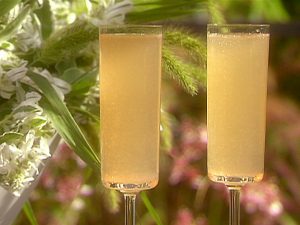
The Mimosa is a popular cocktail dating back as far as the 1920’s and is most commonly served at brunch but is the perfect cocktail for any celebration. A traditional mimosa consists of chilled champagne or sparkling wine and orange juice, served in a champagne flute. While the original mimosa is delicious in it’s own …

The Mimosa is a popular cocktail dating back as far as the 1920’s and is most commonly served at brunch but is the perfect cocktail for any celebration. A traditional mimosa consists of chilled champagne or sparkling wine and orange juice, served in a champagne flute. While the original mimosa is delicious in it’s own right, modern day time has extended the mimosa to a variety of flavors that are only limited by one’s imagination.

Mimosas are wonderfully festive and even better, they are so simple to make. In lieu of orange juice, some popular alternatives are raspberry, grapefruit, pear and quite fittingly for this time of year, cranberry. Many variations also welcome a splash of Triple Sec or Grand Marnier which always add a little extra joy to any occasion. Serve mimosas at your next gathering and you can guarantee a great time will be had by all.

Mimosa Recipe:

1/2 cup juice, such as any of the above suggestions, chilled

2 cups champagne or sparkling wine, chilled

4 tablespoons Triple Sec or Grand Marnier

Directions:

1. Place 1 tablespoon of Triple Sec in each champagne flute.

2. Top with 2 tablespoons of the juice and 1/2 cup of champagne.

3. Serve garnished with a slice or berry of the juice you use.

Serves 4


(Photo Courtesy of The Food Network)


Celebrate 20 years of Limited Edition

October 1, 2009

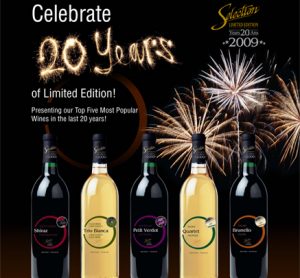
Each year, from January to April, Winexpert releases limited quantities of five very special wine varieties of award winning quality. It’s hard to believe, but 2009 marks the 20th Anniversary of the industry leading Selection Limited Edition program. For this year’s release, to commemorate the occasion, Winexpert will be bringing back five of the most popular Selection Limited Edition varieties of all time providing winemakers with the greatest line-up of Limited Editions ever offered!

Each year, from January to April, Winexpert releases limited quantities of five very special wine varieties of award winning quality. It’s hard to believe, but 2009 marks the 20th Anniversary of the industry leading Selection Limited Edition program. For this year’s release, to commemorate the occasion, Winexpert will be bringing back five of the most popular Selection Limited Edition varieties of all time providing winemakers with the greatest line-up of Limited Editions ever offered!

Don’t forget to try out our Limited Edition game and contest at www.limitededition20.com.

January South African Shiraz

(Originally offered in January 2006)
The Region: Stellenbosch is South Africa’s oldest growing region, the centre for study of viticulture and oenology in Africa, and the heart of the wine industry. Famous for its stunning natural beauty, it has soaring mountains, forests, vineyards, olive groves and veldts. South Africa’s finest red wines thrive in the Cape’s moderate climate, and the Shiraz from this region is dense with jammy richness, intense fruit, and complex spiciness.
The Wine: This wine has a dense, chewy blackberry, earthiness and robust character. This medium/full bodied wine almost begs for early drinking, with spice and rich fruit, but the bold tannins and rich jamminess (typical of Shiraz) will allow it to improve with age for a further 2 years.
The Food: The pepper, plums and red fruit aromas and abundant tannins blend wonderfully with barbecue, grilled red meat and stews.
Sweetness Code: 0


January California Lake County Trio Blanca (Dry)

(Originally offered in January 2005)
The Region: In California’s Lake County, the vineyards nestle in steep hills in the west, while Clear Lake, directly east, moderates the blistering heat of summer, ensuring slow, even ripening and perfect grapes.
The Wine: A unique blend of three grapes, Selection Limited Edition Trio Blanca is an outstanding white wine that showcases bright fruit flavours, excellent structure, and a long finish. Pinot Blanc contributes the delicate floral character and full body while Chenin Blanc gives a wonderful melony-honeyed aroma with hints of apple. The third grape variety, Sauvignon Blanc contributes zesty acidity and aromas of gooseberry and herbs. After six months ageing, the Sauvignon Blanc will dominate with zest and crispness. After a year, the Chenin Blanc‘s honey and melon will come out, and at 18 months to two years the Pinot Blanc will show a perfumed floweriness and
lingering structure.
The Food: Enjoy by itself or serve Trio Blanca with seafood, chicken or vegetarian dishes.
Sweetness Code: 0


February Australian Petit Verdot

(Originally offered in April 2004)
The Region: South East Australia is a literal hotbed of grape growing. The abundant sunshine hours and heat allow growers to ripen varieties that have all but been abandoned by growing regions less blessed. Petit Verdot is one such variety. It makes unsurpassed red wines in Bordeaux, where it goes into their classic Cabernet-Merlot blends, yet the climate there is too cool to ripen it reliably.
The Wine: Best described as a ‘Super Cabernet’, it makes dark, rich wines, with wonderfully concentrated flavours of spice, blackberry and blackcurrant. With smooth, gripping tannins and an elegant structure leading to a magnificent boldly oaked finish, this is a wine for long term ageing and special occasions.
The Food: Excellent when paired with steak, prime rib, lamb, intense cheeses, and game.
Sweetness Code: 0


March Pacific Quartet (Off-dry)

(Originally offered in March 2007)
The Region: The Pacific Coast of North America has micro-climates that match those of the blazing sunshine of the Mediterranean to the crisp mountain air of the upper Rhine. With so much range and variety, there is a perfect terroir for almost any grape you can name.
The Wine: This wine showcases bright fruit, excellent structure and a long finish. Vidal from British Columbia gives spiciness and stone fruit. Chenin Blanc from California gives a wonderful melony-honeyed aroma with hints of apple. Gewürztraminer from Washington contributes lychee, rose petals and floral notes, and Muscat from Australia’s Murray- Darling Valley gives wonderful grapey notes with dried fruit and hints of orange peel.
The Food: This wine has a range of fruit character and enough acidity to stand up to a wide range of foods, particularly spicy and savoury dishes, including Thai cuisine, grilled fish, herbed roast chicken or barbecued salmon. Although delicious right on bottling day, drinking it early would prevent it from showing it’s best–after six months the Muscat and Vidal will dominate with spicy/grapey notes, after a year the Chenin Blanc’s honey and melon will come out, and at 18 months to two years the Gewürztraminer will show a perfumed floweriness and lush structure.
Sweetness Code: 1 (off dry)


April Italian Brunello

(Originally offered in April 2007)
The Region: Italy’s long, narrow peninsula reaches deep into the Mediterranean,
basking in the relentless sunshine and welcoming warmth. Gentle sloping hillsides, rich mineral soils, the moderating breezes off of the Mediterranean waters and unique grape varieties work to make wonderful wines.
The Wine: Brunello is a large-berried variety of the Sangiovese grape, most famous in Brunello di Montalcino. The flavour profile of Sangiovese is fruity, with strong natural acidity, a firm and elegant assertiveness and a robust finish that can extend surprisingly long. The aroma is generally subtle, with cherry, strawberry, blueberry, and violet notes. Medium-bodied but boldly tannic and intense, this gripping wine will begin to open up after six months, but the richer flavours will take at least 18 months to show, with cherry and spice dominating the long, fruity finish.
The Food: Brunello shines in the company of assertively flavoured foods. Hard cheeses such as Asiago and Parmigiano Reggiano are splendid accompaniments and the wines backbone of acids and tannins make it work well with rich and spicy foods like Italian sausages or lasagna.
Sweetness Code: 0